


How To Maximize Credit Card Rewards To Earn The Most Cash Back


If you aren't using a credit card for your purchases, you're missing out. Credit cards offer a unique way to earn rewards and cash back on purchases you're already making, something that debit cards or cash just cannot offer.
With this great ability comes with it the question of how to maximize credit card rewards. As someone who strives to get the most out of everything I do, I've spent a lot of time figuring out the best tips on how to use a credit card to get the most cash back. Here are nine ways to maximize your credit card rewards for all of your cards.
1) Follow The Golden Rule of Credit Cards

I am emphasizing this at the top because it needs to be understood above all things. There is a lot of easy money to be had by maximizing your credit card rewards, but it comes with a catch: you have to pay your full balance on time every month. If you don't, you are charged late fees and interest, which can immediately eat into all of your earnings from cash back or intro offers (not to mention hurt your credit score).
Seriously: always pay off your full balance on time every month. If you can't, rethink your spending habits by creating a budget for yourself.
If you absolutely need to buy something you cannot fully afford at the moment, don't use any solution that will charge you interest or fees when paid over time. Instead, opt for a financing solution that offers monthly payments with 0% APR so you don't lose any money unnecessarily.
2) Research Cards Based On Your Highest Spending Categories

Everyone spends differently, and you should take a look at your spending habits to better understand which category you spend most on. Once you understand your spending habits, you can research and apply for credit cards that offer great rewards for your highest spending categories.
For instance, most people spend a lot of their money on groceries and restaurants, so it makes sense to look for credit cards that offer great rewards on those categories - you can easily find credit cards that offer anywhere from 3-6% cash back on these categories.
If you find you're spending a lot of money at a specific store, look into whether that store has its own credit card. If it does, chances are you'll receive better rewards shopping at that store with its unique store card versus a different card. For example, I do a lot of shopping at Amazon, who happens to offer a pretty stellar credit card that gives 5% cash back on all purchases made on Amazon.

The most optimal credit card choices will depend highly on each person. But if you play your cards right, you can earn 3-6% back on purchases in some of your most used spending categories. I recommend Googling "best credit card for [insert spending category]" and doing some research on which cards make the most sense for your specific use case.
3) Get A Good Everyday Card
Regardless of whether you're a beginner or a veteran in the credit card game, everyone should have a good versatile everyday card that offers up to 2% back on all purchases. No matter how well you plan out your credit card categories, there will always be a need for a good all-around card for purchases that do not fall in any special reward category, such as rent payments, medical payments, and more. Sure most cards offer at least 1% back on all purchases, but if you can easily get up to double that on all purchases, you should.
4) If You're Earning Points, Look Into Redemption Values

Credit card rewards typically come in two flavors: cash back and points. Cash back is fairly straightforward: for every dollar you spend, you will receive a percentage back in cash. Plain and simple.
If your credit card offers rewards in the form of points, the situation is a bit more complex. Generally speaking, one point tends to equal $0.01 for most card carrier programs, however there are ways you can redeem certain points for more (or less) than $0.01 in value.
There are different ways of redeeming your points for higher or lower than $0.01 depending on the card carrier's program, and they generally involve either a) waiting for a promotion where points are worth more, or b) transferring points to a different rewards program (such as Hilton, Delta, etc). However, finding the optimal redemption rate is just as much an art as it is a science, and it can require a lot of research and planning.
If you're someone who likes to do this type of research, I highly recommend checking out The Points Guy or some other resource that can go into more depth than I can on getting the most out of your specific card's points system. However, if you like to keep things simple, the general rule of thumb you should follow is that you should redeem each point for no less than $0.01.
5) Take Advantages Of Intro Offers

Most credit cards, even free ones, offer some sort of intro offer that gives you cash back or points for spending a certain amount of money during the intro period. These offers can net you anywhere between $200 - $600 just for spending as you normally would, but on their card.
When you get a new credit card, take advantage of these offers and plan your spending accordingly. You can easily make 10-20% back on your spending in the intro period, not to mention all the points you already accrued. Plus redeeming these offers can help offset the cost of the annual fee if your credit card has one, which leads us to the next item.
6) Give Extra Scrutiny Toward Cards With Annual Fees

Many credit cards offer excellent intro offers and cash back rewards without an annual fee, but some of the best cards do require an annual fee. You'll want to be extra careful when dealing with these cards, as these cards can either be a hugely positive investment or a hugely negative one depending on the person.
For instance, let's say you signed up for a card with a $95 annual fee because it offers 3% back on dining and gas. That's great, but then that means you'd have to spend at least $3,166.67 on those categories throughout the year in order to make back your initial $95 investment. In many cases, this is actually pretty easy, but the higher the annual fee, the more careful you need to be.
Here is a table with some common annual fees as well as how much you'd need to spend in any of the cash back percentage combinations in order to make your money back on rewards alone:

Of course, this table doesn't account for intro offers, which often earn back the annual fee (and then some). However, keep in mind that most credit cards with annual fees require you to be a member for longer than one year: if you apply for a credit card just for the intro bonus and then cancel before the first year is over, you may have to give back the points you received.
Cards with annual fees do generally have additional perks such as monthly or annual credits toward travel, entertainment and other services. These credits can be an easy way to make back the money you spent on the annual fee, however I'd be careful about factoring that into your pricing if you're not already spending money on those services. (If a credit card offers you $7 back monthly on Disney+, that's great if you already pay for Disney+, but if you don't pay for Disney+ or watch anything on it, the credit isn't really adding anything to your life, and you're ostensibly still paying for the service.)
If you find that you aren't going to utilize a card's benefits enough to break even on (or ideally, earn more back than) the card's annual fee, steer clear of that card and opt for one with a lower - or even free - annual cost that still offers solid rewards.
7) Use Multiple Cards
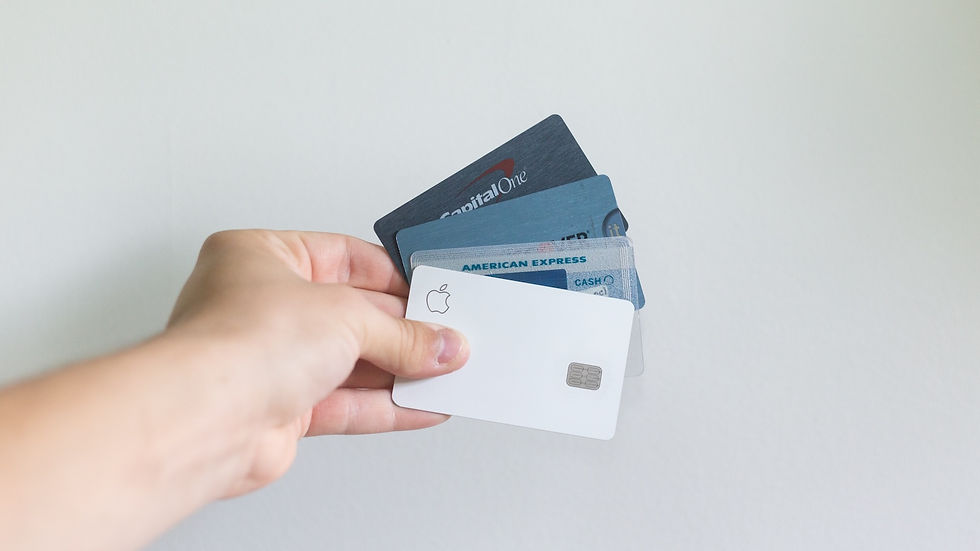
Ideally, you'd balance multiple cards so that you can maximize the rewards across a number of different categories. However, you'll want to wait some time between applying for credit cards, as applying for too many credit cards in a short amount of time can harm your credit score.
Be extra careful balancing multiple cards with annual fees as well, otherwise you may find you're not using the cards to their potential and may lose money as a result. Also be sure to pay all of these cards on time (which is easy if you simply automate your bill payments).
8) Take Advantage Of No Foreign Transaction Fees

One of the best perks of many major credit cards is that they offer zero fees on foreign transactions. For those of you who don't know, debit cards generally fee you 3% on all transactions made in a foreign country.
Many, though not all, credit cards eliminate these foreign transaction fees altogether, meaning you only have to pay the converted cost. If you travel a lot, you can save a considerable amount of money over the long run by saving 3% on every card purchase.
I still cringe at the fact that I made a $2,000 purchase abroad on a credit card with a 3% transaction fee, meaning I lost $60 even though I had a card with no foreign transaction fees and just didn't use it.
Don't be like me. If you're traveling internationally, get a card with zero foreign transaction fees and use it.
9) Activate Bonus Offers For Services You're Already Using

Credit card companies want to incentivize you to spend on their platform however they can, and this often comes in the form of offering bonuses for spending in certain ways using their card. We can easily take advantage of these bonuses and earn easy money back on spending we were already going to do.
Many credit cards offer redeemable bonuses for specific stores when you spend a certain amount at the store. In the last three months, for example, I've earned $20 back for Dropbox, $30 back at Ray-Ban $4 back for AMC (which I only bought to watch Mad Men, otherwise curse you AMC+!). These were all purchases I was already planning on making, so utilizing these bonus offers simply meant free money back in my pocket.
Sometimes your credit card company will even offer you credit statements for performing certain actions, most of which are very easy and can be accomplished through everyday use. In the last three months alone, I received $15 for making three PayPal purchases, $15 for paying my insurance bill on a credit card, $10 in Amazon credit for using a Discover Card, and $10 for sending a Venmo via Amex. That's $50 of free money in three months.
Certain cards often offer temporary bonus cashback categories as well. Soome cards, such as Discover, have bonus cashback categories during certain times of the year that give extra cashback when you spend in those categories. Amazon's Prime VISA once even had a temporary offer that gave me 10% back on gas (up from its typical 2% back) for three months.
As you can see, there are myriad ways to make money back from these bonus offers, but there's a catch: you shouldn't let the bonus offer be the sole reason you make a purchase. If you weren't planning to buy Ray Bans but saw that there was a $30 off offer and decided to buy them, you're ultimately still spending a lot of money you wouldn't have otherwise spent. Whereas if you were already planning to buy them anyways and saw the offer, you're simply saving money on a purchase you were already going to make.


Comments